
Today’s Motto: ‘Misery instigates suicide: Many live because they are afraid to die….
....yet many Die because they are Afraid To Live'
As Every Day makes a new beginning in life, it brings new opportunities, opens new avenues, to perform and make a mark, to write a Page in History Book!
This is Your Day-TODAY: Take a Determined Step Forward and Make History!
On this day, 19 May….
1952: Government of India reconstituted the National Film Board, now called Central Board of Film Certification (CBFC). It has regional offices in Chennai, Mumbai and Calcutta. The first authority for certification of Film categories was formed in 1920 as Indian Cinematograph Act. It certifies films in Categories A, U, U/A 7+, U/A 13+, U/A16+ and S.
1956 – The Indian govt bans six US and two British films for presenting a ‘disparaging’ impression of life in Africa, including ‘African Queen’ and ‘Mogambo’.
1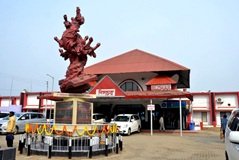 961 – At Silchar Railway Station, Assam, 11 Bengalis die when police open fire on protesters demanding state recognition of Bengali language in the Bengali L
 anguage Movement.
1971 – Indian Navy’s first submarine station started at ‘Veer Bahu’ in Visakhapatanam.
1987 – A patent for “keeping a head alive” was issued to Chet Fleming. A cabinet provides physical and biochemical support for an animal’s head severed from its body. Oxygenated blood and nutrients are circulated by means of tubes connected to arteries and veins that emerge from the neck. A series of processing 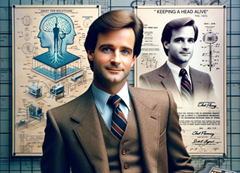 components removes carbon dioxide and add oxygen to the blood. After being thoroughly tested on research animals, the patent suggests it might also be used on humans suffering from various terminal illnesses.
1993 – Government decides to merge Vayudut with Indian Airlines.
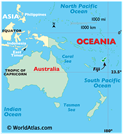
2000 – A `civil coup’ in Fiji ousts the first ethnic Indian Prime Minister Mahendra Pal Choudhary. President Ratu Sir Kamisese Mara proclaims a state of emergency.
2019 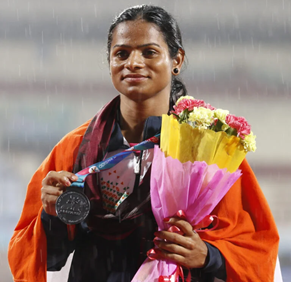 – Sprinter Dutee Chand comes out as India’s first openly Gay (LGBTQ+) professional athlete. Popular sprinter who specialized in the women’s 100 m and 200 m events. She is the third Indian woman ever to qualify for the women’s 100 m event at the Olympics and represented Indian in 2016, 2020 Olympics. She won 2 Silver medals at Asian Games and was awarded Arjuna in 2020.
 War of Independence. He led the seize of Cawnpore (Kanpur) during the Freedom movement. Heir to the Bitthoor state, Nana Saheb (Govind Dhondu Pant) he was denied any of King’s position of pensions by the British East India Co. which made him join the other revolting leaders.
1913 – Neelam Sanjiva Reddy, President of India from July 1977 to July 1982. Ealier he was Chief Minister pf Andhra Pradesh, a Central Minister and Speaker of Lok Sabha twice. Though he was a Congress candidate for Presid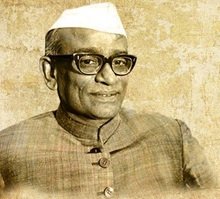 ent’s election in 1969, yet he was denied support by then PM Indira Gandhi, resulting his defeat against Independent candidate VV Giri. He joined JP Movement later and was elected unanimously when Janta Party govt. came to power in 1977.
1938 – Girish Karnad, actor, director, screenwriter, and playwright. He worked in Kannada, Hind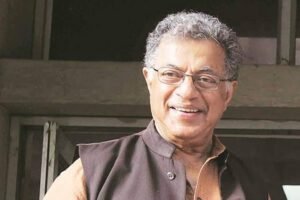 i, Malayalee, Tamil, Telugu films including Ek Tha Tiger, Vamsha Vriksha, Tughlaq, etc. He was honoured with Jnanpeeth award in 1998 , Padma Bhushan and 4 Filmfare awards.
RIP…. 1904 – Jamshedji Nasarvanji Tata, pioneering industrialist and founder of the Tata Group. He was father of modern technology. He commenced cotton mills in Bombay and Nagpur and founded the Tata Iron and Steel Company, which is one of the largest integrated steel mills in the world.
1980 – General T. N. Raina, former Chief of Indian Army. (Tapishwar Narain), 10th Chief of Indian Army between May 15, 1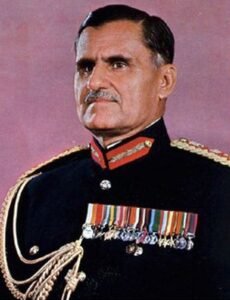 975-May 31, 1978. He also served in WW-II in Iraq and later on Burma Front. During his tenure as a CoAS, he is believed to have refused to PM Indira for use of military against JP- led agitation during Emergency in 1975-77. He was later appointed High Commissioner to Canada. Awarded MVC, VSM and Padma Bhushan.
2008 – Vijay Tendulkar, playwright, screenwriter, satitircal literary person and political activist. Hios plays Shantata Court Chalu Aahe, Ghasiram Kotwal, Sakharam Binder etc. won him great acclaiim and various national and international awards. He was honoured with Padma Bhushan, Sangeet Natak Akademi award and Fellowship, National Film award for Manthan Screenplay and 3 Filmfare awards.
You may have known…. 1. Around the 17th century, India was one of the richest countries in the world and was called Sone Ki Chidiya too. 
2. In ancient Rome, there was a tax on Urine. Aged urine was used to clean clothes and dye fabrics. Some people even used it as toothpaste. At the time, collecting human urine was a common practice in order to take advantage of its cleaning properties. One Roman emperor, Vespasian, even taxed the stuff.
 {Compiled by Lt. Gen. (R) Raj Kadyan}


Comments are closed.