
Assam: Jonai children risk boat journeys to reach school due to damaged bridge
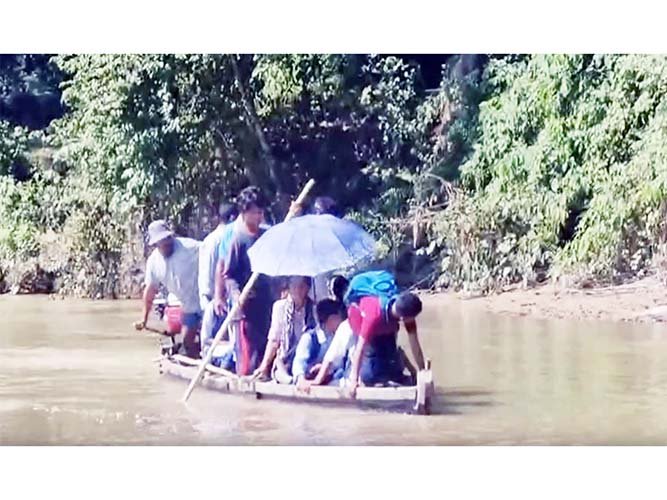 Jonai : Students in Assam’s Jonai are using boats to cross the Kemi River to reach school after a bridge in the area was damaged on June 28. According to assistant teacher at Kemi-Jelam Middle English School Bhagyashree Saikia, more than half of the students at Kemi-Jelam Middle English School come from three villages located across the river. Highlighting the difficulties faced by students, Saikia said that the absence of the bridge is causing significant difficulties for the students. Speaking to news agency, Saikia said, “More than half of our students come from the other side of the bridge. There are about three villages there, and the absence of the bridge is causing significant difficulties for the students. Nowadays, boats are not always available on time; even when one is available, too many children have to crowd into it, which greatly increases the risk of an accident.
Saikia further explained that students are also forced to cross the river on foot when boats are unavailable, affecting their attendance and damaging their school materials.
“If they cannot find a boat, they have to cross the river on foot, causing their clothes and books to get wet. They are unable to attend school regularly. Some teachers and staff members from nearby schools also commute from the other side of the river and face trouble reaching school on time…the bridge was damaged on June 28,” she added.
The bridge was damaged on June 28 after floodwaters in the Kemi River swept away a 300-metre-long iron bridge connecting Kemi and Oyan, disrupting connectivity between the Kemi-Purana Jelom area and Jonai Sadar.
Meanwhile, the latest data from the Assam State Disaster Management Authority (ASDMA), as of August 18, showed that floods have claimed 105 lives in the state so far this year, while nearly 32,000 people across five districts remain affected.
Of the 105 flood-related deaths, 64 were male, 24 female and 17 children, according to ASDMA’s Disaster Reporting and Information Management System (DRIMS). Sivasagar recorded the highest number of deaths at 53, followed by Charaideo with 22, Jorhat with nine, Golaghat with eight, Karbi Anglong with four and Dhemaji with three.
The latest figures also show that the flood situation continues to affect thousands of people across the state. Nearly 32,000 people in five districts are still affected by the flooding.
According to the latest ASDMA flood report, 3,198.77 hectares of crop area remain submerged. The continued inundation of agricultural land has raised concerns over crop losses and the impact on the livelihoods of farming communities in the affected areas.
Assam is particularly vulnerable to annual flooding during the monsoon due to its extensive river network, with the Brahmaputra and its tributaries frequently overflowing following heavy rainfall. Flooding regularly affects villages, agricultural fields, roads and other infrastructure across the state.
The recurring floods also force thousands of residents, particularly those living in low-lying and riverine areas, to move to safer locations and depend on relief camps and government assistance.