
The status quo remains after Xi visits Trump
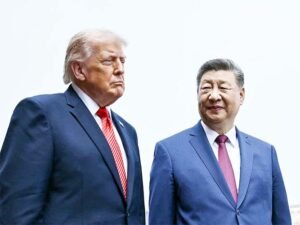 Hong Kong The leaders of the world’s two most powerful countries met in Washington, DC, from 23-25 September 2026. This summit between President Donald Trump and Chairman Xi Jinping was much anticipated, but the results were underwhelming and did nothing to diminish the intersecting trajectories of the two nations.
However, some take it as a positive that the two countries remain committed to engagement. Certainly, it is better than fighting, yet neither side has any manoeuvre room or appetite for compromise. That means problem areas such as Taiwan are simply kicked down the road yet again.
There were also head-scratching moments, such as when David Perdue, the US Ambassador to China, related how Trump offered to sell weapons to Beijing. What was Trump thinking? China is the USA’s greatest strategic threat, and he is offering weapons or military equipment to authoritarian China?
Ryan Hass, Director of the US-based Brookings Institution’s John L. Thornton China Center, commented, “If there was any ambiguity about whether President Trump views China as a security threat, this disclosure by Perdue puts the question to rest. Trump’s offer to sell weapons to China will be unsettling to American partners at the pointy edge of China’s spear.”
At the same time, Trump is withholding large packages of arms sales to democratic Taiwan so he can use them as a bargaining chip with China. He did so as a gesture towards Xi, but has got nothing in return. Will Trump finally realise that Taiwan is not a bargaining chip to be used in his gamesmanship with Xi?
Drew Thompson, a Senior Fellow at the S. Rajaratnam School of International Studies in Singapore, is of the opinion that, “Trump may say things off the cuff that make Taipei (and US allies) uncomfortable, but that will not change the long-term trajectory and trend of US security commitments to Taiwan. Nor will it affect cross-strait relations, which are not progressing towards Beijing’s primary objective of peaceful unification.”
However, Thompson believes Trump will not approve the next arms sales notification to Taiwan till early 2027, after an APEC meeting scheduled for November and a G20 gathering in December.
Perdue also shared this regarding Taiwan: “China has tried to coerce change in that regard. We’re not changing the language. We’re not changing our position there. We want peace across the strait. We don’t want coercion. We don’t support independence. And we think that, you know, President Xi has gotten that message. POTUS has shown respect and listened to their side of that argument, but we’re more stable on that issue today than we have been in the last decade.”
However, the USA should have given a stronger rebuttal by saying it “opposes” coercion. Comparing Perdue’s assessment with Trump’s remarks to the media showed worrying gaps too. The president said of Taiwan, “We didn’t talk about it too much. Right now it’s, you know, fine. It’s just moving along. But we didn’t spend a lot of time talking about Taiwan.”
The statements put out by the two governments after their summit indicated their different priorities too, as each jostled to put a gloss on the proceedings to prove they had gained the upper hand.
Beijing’s statement mentioned the fact that the two parties “reached eight deliverables and understandings”. The first of those points was, “The two sides agree to build ‘a constructive China-US relationship of strategic stability on the basis of respect, fairness and reciprocity’.”
Yet in its Mandarin version, China’s word for “reciprocity” has a very different nuance. For Trump, “reciprocity” is a transactional word – “If you do something for me, I’ll do something for you”. Yet China is using the word to indicate both mutual respect and equal status between two peers. This illustrates how two countries at loggerheads are battling for control of the narrative.
Other points in the “eight deliverables” were mutual support in attending the APEC Economic Leaders’ Meeting and G20 Summit in each other’s countries; an agreement that Iran should not develop nuclear weapons or exact tolls in the Hormuz Strait; and a reminder that the two countries were allies in World War II.
The latter seems an odd point. Consider that Japan and the USA were adversaries in World War II, and yet they now are allies. The opposite is true of China – they were once allies, but communist China is now a strategic competitor of the USA.
Continuing with the “deliverables”, China and the USA praised the Sino-US economic and trade consultation mechanism, as well as the Board of Trade and a reduction in tariffs. They also praised “visible outcomes” in counter-narcotics efforts. However, China’s arrest of a couple of dozen distributors is merely a drop in the flood of fentanyl flowing from China to the USA.
The final two points listed by Beijing encompassed “establishment of the China-US AI Dialogue to exchange views on risks and benefits” related to artificial intelligence. The next meeting will occur by November, and they will also establish a bilateral communication channel for AI incidents. The final deliverable was the lease of two pandas to Atlanta Zoo. Additionally, China mentioned a memorandum of understanding on crisis communication and prevention between the two militaries to be established “as soon as possible”. However, such agreements already exist, and China refuses to answer the phone when the USA calls. What point is there in rehashing this, when Beijing holds hostage any communications whenever it gets in the huff? The White House fact sheet did not mention this agreement, and one US official even said the issue was never even discussed during the summit.

