
Today’s Motto: ‘In life, some people are part of your history, but not of your destiny; let them go’
‘Good fortune comes out of the womb of diligence’
As Every Day makes a new beginning in life, it brings new opportunities, opens new avenues, to p!erform and make a mark, to write a Page in History Book !
This is Your Day-TODAY: Take a Determined Step Forward and Make History !
On this day, 02 Oct….
(International Day of Non-Violence).
1905 – First Indian Shipping Company of India started by VO Chidambaram Pillai, a legendary freedom fighter, lawyer, and businessman, to meet the challenge of British shipping trade. He started the route betwe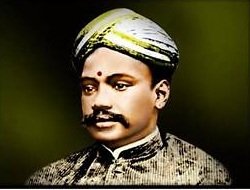 en Tuticorin in India and Colombo in Cylone (Sri Lanka) with just Rs. 10 lakhs (pic credit-academicdestressor.com).
1866 – J Osterhoudt patents tin can with key opener. (The can opener wasn’t invented until 48 years after the invention of the can. In 1795, Napoleon Bonaparte was having problems with his supply lines. Specifically, they were too long for the food preservation methods at the time, making it difficult to adequately supply his troops with needed food. Thus, he offered a 12,000 franc prize for anyone who invented a preservation method that would allow his army’s food to remain unspoiled during its long journey to the troops’ stomachs. In 1810, Nicholas Appert won the prize for his method of keeping food fresh by sterilization
 1895 – First cartoon comic strip is printed in a newspaper.
1912 – Gopal Krishna Gokhale, at invitation of Gandhi, arrives in South Africa on a 26-day tour; he also visits Tolstoy Farm. Gokhle, was one of the leading political and social awakening of Indians, is known as Gandhi’s political Guru.
1925 – Rashtriya Sewak Sangh, an organisation for promoting Ram Rajya concept of Governance in India, awakening on Sanatan, Hindu culture and ethos by Dr. Kes hav Baliram Hedgewar on Dussehra Day in Nagpur.
1934 – Indian Naval Force was established. The earliest known reference to an organisation devoted to ships in Ancient India is to the Mauryan Empire from the fourth century BCE. 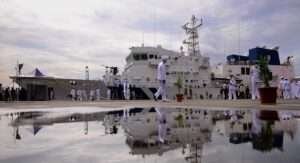 Emperor Chandragupta Maurya’s Prime Minister Kautilya’s Arthashastra devotes a full chapter on the state department of waterways under navadhyaksha [Sanskrit for Superintendent of ships]. The term, nava dvipantaragamanam [Sanskrit for sailing to other lands by ships, i.e. Exploration] appears in this book in addition to appearing in the Sanskrit text,Baudhayana Dharmasastra as the interpretation of the term, Samudrasamyanam. In 1612, the English East India Company established the East India Company’s Marine to protect its merchant shipping off the Gulf of Cambayand up the Narmada and Tapti rivers. Its first fighting ships in India were acquired on 5 September 1612. In 1934, the navy was renamed the Royal Indian Navy. As of today, the Indian Navy has a strength of 73,869 active personnel, 75,000 reserve personnel, 250 ships including auxiliaries, and ap
 prox. 300 aircraft).
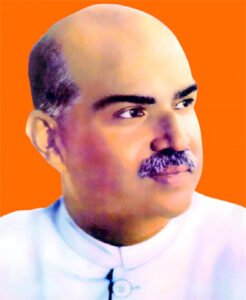
1951 – Dr. Shyamprasad Mukharjee established Bhartiya Jan Sangh. In 1977, it was merged with Janata Party in 1977, after Emergency was lifted and Janata Partyn was formed to fight Lok Sabha election against PM Indira Gandhi’s (Congress-I) Party. After the Janata Party split in 1980 due to fall of PM Charan Singh govt., Jan Sangh was reborn and named Bhartiya Janta Party.
1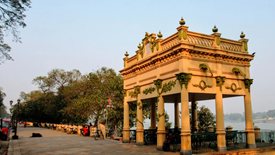 954 – Chandernagar, formerly under French possession, was made a part of West Bengal, India .
1957 – World War II epic Film “The Bridge on the River Kwai” is released. It was widely praised, winning seven Academy Awards.
1957 – All India Scheduled Caste Federation formally dissolved and a new political party  ‘Republican Party of India’ was formed.
1971 – Homing pigeon averages 133 KPH (record) in 1100-km Australian race.
1986 -Rajiv Gandhi survives assassination attempt made at Raj Ghat while paying homage at Gandhi Samadhi.
2018 – S audi American journalist Jamal Khashoggi enters the Saudi consulate in Istanbul, never to be seen again prompting a diplomatic crisis. He was believed to be killed by Saudi secret agents on their govt’s behest.
Born…. 1869 – Mohandas Karamchand Gandhi (popularly known as Mahatma Gandhi and Father of the Nation, who was a guiding light in Indian Freedom movement from 1915 onwards. Born in Porbander (Gujarat), he went to South Africa as a lawyer for Indian businessmen there. A turning point in his life came when some English passengers threw him out of Ist Class compartment in Transval (Pietermeritzberg) station 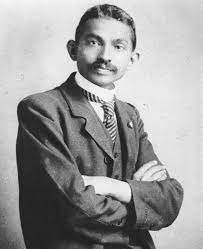 disallowing Blacks/Brown Indians to travel in their compartment (1893). His non-violent protests made him popular among local South Africans. He came to India in 1915 and took control of Indian National Congress, leading by Satygrahas, (non-violent protests) against British tyranny, discrimination and ultimately led India’s Freedom struggle until 1947. He started The Indian Opinion in South Africa, Harijan in India and wrote on social evils in Indian society. He was bitterly pained at blood-shed during Partition of 1947, into India and Pakistan; many believe he favoured Muslims and Pakistan unduely. After Independence, he pleaded for dismantling Congress Party but Nehru and other leaders refused. He was killed by a right-wing activist Nathuram Godse on Jan. 30, 1948.
1904 – Lal Bahadur Shastri, the second Prime Minister of India (1964-66). Was born in Mughalsarai (now called DD Upadhyay Nagar), near Benaras in 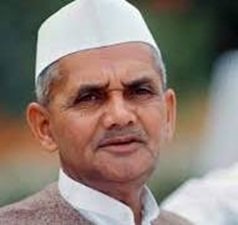 Uttar Pradesh. He led the country during 1965 Indo-Pak war and gave a slogan of Jai Jawan, Jai Kisan to countrymen. He died of suspected food poisoning in Tashkent (USSR) during a peace meeting under supervision of Russian Premier Alexei Kosygin on January 10, 1966.
RIP…. 1906 – Raja Ravi Verma. He is remembered for his artistic work portraying Indian gods and religious paintigs in ‘Ram Panch ayatan’, ‘Vishwamitra-Menaka’, ‘Shakuntala writing a letter’, ‘Shiv Parvati’. A commemorative stamp was issued by the Postal Department on April 29, 1971 in his honour.
1975 – Kumaraswami Kamaraj, popular freedom fighter from South who became Madras Chief Minister (1954-63). Congress President from 1964-67 and was the main supporter of Indira Gandhi becoming Prime Minister (instead of veteran Morarji Desai) in 1966, after Shastriji’s death. This led to a split in the party into Congress (I) and Congress (O). Later in 1967 he joined Congress(O) faction which faired badly in the 1967 and 1971 elections, leaving Indira as sole and strong Congress leader due to some of her bold political-financial decesions. Kamraj was honoured with Bharat Ratna in 2004.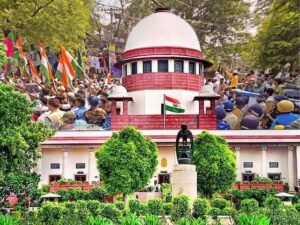
You may have known…. 1. As of now, there are over 53 million pending cases in Indian courts, with approximately 46 million in lower courts, 6.3 million in High Courts, and 86,000 in the Supreme Court. Some of the cases have been pending for decades.
2. The first US plane to bear the designation “Air Force One” was Columbine II, the aircraft that transported President Dwight D. Eisenhower from 1953 to 1954. In 1953, Eisenhower’s plane, then called Air Force 8610, almost collided with a passenger plane, Eastern Air Lines 8610. The Air Force One name was born to quickly communicate to air traffic control which plane the president was on, avoiding confusion with other  planes in the area. {Compiled by Lt. Gen. (R) Raj Kadyan}

