
“They’re not going to be tolls”: Trump on possible charges imposed to pass through Hormuz
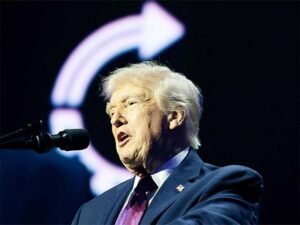 Washington DC : US President Donald Trump on Friday (local time) dismissed the possibility of Iran imposing any form of tolls or charges on vessels passing through the strategic Strait of Hormuz, saying, “they’re not going to be tolls,” and rejecting the idea outright.
Responding to a question during an interaction with reporters aboard Air Force One, Trump was asked whether Iran could impose restrictions or levy charges on ships navigating the key maritime route.
“No way. None at all? Nope. You can’t do the tolls. No, they’re not going to be tolls,” Trump responded.
The comments come amid heightened geopolitical focus on the Strait of Hormuz, one of the world’s most critical oil shipping routes, where any disruption or restriction could have significant global economic implications.
This comes after Iran said that it will not impose “traditional fees” on ships passing through the strait, but is considering a new framework tied to security coordination, according to Al Jazeera.
Speaking to Al Jazeera Mubasher, the spokesman for Iran’s National Security Committee, Ebrahim Rezaei, said Tehran is drafting legislation that would introduce fees related to “securing the strait”, rather than conventional transit charges.
Rezaei stated that vessels would only be allowed to pass through the critical waterway in coordination with Iranian authorities, signalling tighter oversight of maritime traffic.
He added that “hostile military vessels”, particularly those from the United States and Israel, would be barred from passage entirely, while “friendly” ships could transit subject to prior coordination with Iranian forces.
He also emphasised that Iran rejects any role for the United States in managing or securing the strait.
Meanwhile, diplomatic engagements are currently underway between the two sides, aimed at achieving a complete halt to the hostilities in West Asia.
The enatuhisn are taking place amid a two-week cease-fire deal between the US and Iran, which is set to expire on Wednesday, April 22.


Comments are closed.