
“Unacceptable violations”: European Council Chief backs UAE after Iranian strikes, calls for de-escalation
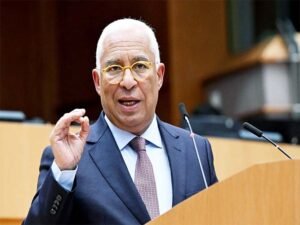 Brussels [Belgium] : European Council President Antonio Costa has joined a chorus of world leaders expressing solidarity with the UAE, following reports from Abu Dhabi that Iranian missile and drone strikes targeted civilian infrastructure.
Conveying his support via a post on X, Costa affirmed his “full solidarity with @MohamedBinZayed and the people of the United Arab Emirates following Iran’s unjustified missile and drone attacks on civilian infrastructure.”
The European leader condemned the escalation as a breach of global norms, stating, “These violations of sovereignty and international law are unacceptable and need to stop.” Amid the rising tensions, the EU President urged Tehran to resume diplomatic engagement to protect the precarious ceasefire involving the United States and Israel.
“Iran must engage in negotiations to ensure the ceasefire in the Middle East holds,” Costa emphasised, noting that the EU remains dedicated to collaborating with global stakeholders to achieve de-escalation and the reopening of the Strait of Hormuz.
This sentiment was mirrored in Berlin, where German Chancellor Friedrich Merz called on the Iranian leadership to resume diplomatic negotiations following Monday’s strikes. The attacks represent the first instance of Iranian military action against the Gulf state since a ceasefire was established nearly four weeks ago.
According to the UAE Defence Ministry, its air defence systems successfully intercepted a total of 12 ballistic missiles, three cruise missiles, and four drones. Reacting to the escalation, Chancellor Merz emphasised the need for regional stability and an end to maritime disruptions.
“Tehran must return to the negotiating table and stop holding the region and the world hostage. The blockade of the Strait of Hormuz must end,” Merz stated on X. He further expressed support for regional allies, adding, “We strongly condemn these attacks. Our solidarity is with the people of the United Arab Emirates and our partners in the region.”
The German leader also reaffirmed his long-standing position on Iran’s nuclear ambitions and the safety of partner nations, asserting that “Tehran must not acquire a nuclear weapon” and that “there must be no further threats or attacks against our partners.”
The condemnation from Berlin was echoed in London, where British Prime Minister Keir Starmer called for immediate de-escalation. “The UK condemns the drone and missile strikes targeting the United Arab Emirates,” Starmer said.
The Prime Minister stressed the importance of diplomatic engagement to maintain the current truce, stating, “The escalation must cease. Iran needs to engage meaningfully in negotiations to ensure the ceasefire in the Middle East endures, and a long-term diplomatic solution is achieved.”
In Paris, French President Emmanuel Macron described the targeting of civilian sites as “unjustified and unacceptable,” further highlighting the international concern over the deteriorating security situation.
The surge in hostilities comes as discussions between the United States and Iran have failed to yield significant progress. The lack of diplomatic breakthroughs has left the ceasefire, which was agreed upon on 8 April, appearing increasingly fragile.


Comments are closed.