
“Must show leadership, not be spectator to global crises”: EAM Jaishankar demands reformed multilateralism on occassion of UN Day
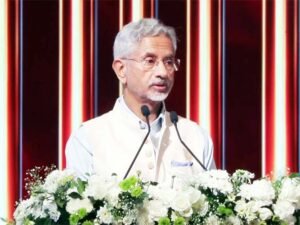 New Delhi : External Affairs Minister S Jaishankar on Sunday called on the United Nations to shed its passivity and undertake long-pending structural reforms at the Chinmaya Amrit Mahotsav Global Sammelan on ‘Non-Dualism for World Understanding’ at Bharat Mandapam on the occasion of UN Day.
Jaishankar warned that the international community cannot remain helpless as bystander nations and populations bear the cascading economic brunt of raging wars in Ukraine and West Asia. Emphasising that global governance structures established eight decades ago under Article 1 of the UN Charter were meant to act as a centre for harmonising international actions, the External Affairs Minister noted that current institutional gridlocks leave far-removed populations suffering from conflicts they had no role in starting.
He said there’s always been a debate between competition (everyone for themselves) vs cooperation (working together). 80 years ago, after World War II, the world chose cooperation and that is why the United Nations was founded. UN Day is a reminder of that spirit of oneness.
Jaishankar asserted, “Humankind has witnessed perpetual arguments between those who stress competitiveness and others who see a virtue in cooperation. These may be individual or even societal predicaments, but on the global stage, they translate into how nations behave with one another. The collective and cooperative instincts of the world were articulated, were expressed eight decades ago in the founding of the United Nations. It is fitting, therefore, that we gather to advance a sense of oneness as we celebrate the UN Day. After all, whether it is the challenges or the opportunities that confront the world, these can be best, most effectively addressed collectively.”
He pointed to the two major wars right now, in Ukraine and in West Asia/Middle East. His point is that even people and countries far away who have nothing to do with these wars are paying the price through higher fuel, food prices, economic disruption.
“There are today two major conflicts going on in the world: in Ukraine and in West Asia or the Middle East. Societies and economies, peoples far away, who have little say in the matter, are actually paying the cost. We cannot remain helpless spectators,” said the EAM.
India, he said, is echoing what much of the world feels: that these conflicts can only end through dialogue and diplomacy, not on the battlefield. India is trying to help in its own way and is willing to work with other countries to push for peace.
“India expresses global sentiment when we urge that dialogue and diplomacy are the only solution. We are making efforts ourselves and are open to working with other partners to that end,” added Jaishankar. Calling for an overhaul of decision-making bodies like the UN Security Council, Jaishankar reiterated India’s persistent demand for reformed multilateralism. He stressed that large portions of the developing world, particularly the Global South, can no longer be excluded from global governance frameworks.
Directly calling out the institutional shortcomings of the UN, Jaishankar declared, “We live in an imperfect world, but we all continuously strive towards greater perfection. Where the UN is concerned, that means recognising its shortcomings and limitations, and seeking its improvement. The case for reformed multilateralism gets stronger by the day. Large parts of the world cannot be left out of decision-making.
He asserted that the UN must show leadership, not be a spectator to global crises. “On this occasion, even as we recognise the need for such long-awaited changes, let us renew our commitment to work together. We are common, we are shared, we are united.”
Celebrated on October 24, United Nations Day marks the anniversary of the entry into force in 1945 of the UN Charter. The United Nations officially came into being with the ratification of this founding document by the majority of its signatories, including the five permanent members of the Security Council. When the United Nations was born in 1945, its promise was carved in its very first line, to “save succeeding generations from the scourge of war.” Eighty years later, that promise feels fragile.

