
Jordanian military says its air defences intercept 10 Iranian missiles
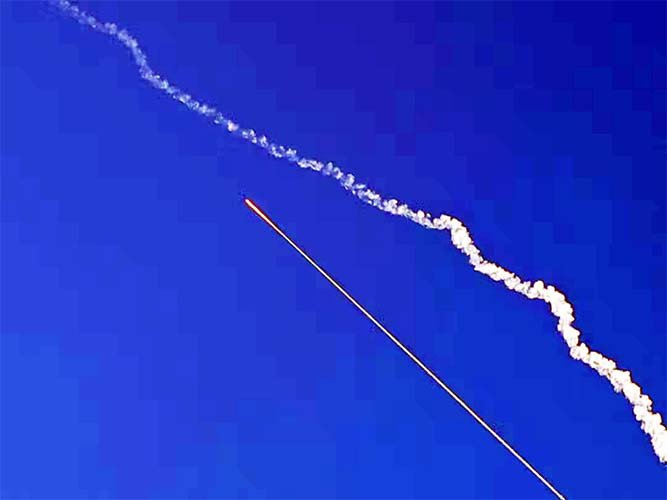 Amman : Air defence networks in Jordan successfully intercepted and brought down 10 Iranian missiles that violated regional airspace during the early hours of Saturday morning, Al Jazeera reported. The kingdom’s armed forces deployed tactical countermeasures to neutralise the incoming projectiles after they entered the country’s sovereign boundaries.
According to the military, the anti-missile engagement “was carried out in accordance with standard defensive measures to safeguard the kingdom’s sovereignty and ensure public safety”.
The operational command reaffirmed its commitment to securing the skies against external threats to maintain territorial integrity.
A subsequent report by Al Jazeera confirmed that the defensive actions did not cause any adverse impact or harm within the country’s borders.
“No casualties or material damage were reported from the interceptions, and Royal Engineers units have already begun clearing and securing debris from the impact sites,” it added.
The regional spillover simultaneously triggered emergency defensive measures in Kuwait, where air defence systems actively engaged in repelling a wave of hostile missile and drone attacks following what military officials condemned as “sinful Iranian aggression”.
The General Staff of the Kuwaiti Army confirmed the ongoing interceptions in a public statement, reassuring citizens that loud explosions heard across the region are the direct result of the nation’s air defence networks successfully neutralising incoming threats.
Details regarding specific targets or casualties have not yet been released. However, military leadership issued an urgent directive to the public, calling for calm and advising all residents to strictly adhere to security and safety protocols issued by competent civil defence authorities as the situation develops.
In a post on X, the armed forces confirmed that the active engagement marks the second time the Kuwaiti army has engaged hostile targets in the past few hours.
The military activations come amid a massive expansion of Washington’s offensive against Tehran, with the US launching fresh operations against transport networks, energy systems, and a strategic port facility.
This latest wave of attacks developed as US President Donald Trump continued to apply mounting pressure on Tehran regarding its control over the Strait of Hormuz, a vital maritime corridor handling a significant share of global oil supplies.
Detailing the offensive in a post on X, the US Central Command (CENTCOM) announced that it launched strikes on Iran around 3 pm on Friday and concluded the attacks around 9:30 pm ET.
The military command asserted that “US forces employed fighter aircraft, aerial drones, and warships, in addition to other assets, to hit surveillance sites, military logistics infrastructure, underground weapons storage, and maritime capabilities”.
Underscoring the strategic objective behind the continuous operations, the US military stated, “CENTCOM continues to hold Iran accountable at the Commander in Chief’s direction while fully enforcing a naval blockade against Iranian ports.”


Comments are closed.