
Today’s Motto: ‘True measure of intelligence is the ability to change’
As Every Day makes a new beginning in life, it brings new opportunities, opens new avenues, to perform and make a mark, to write a Page in History Book !
This is Your Day-TODAY: Take a Determined Step Forward and Make History !
On this day, 26 Oct….
1492 – Lead pencils first used. (The oldest known writing implements were basically rocks used by cavemen. Then they started delving into leaving markings on leaves, bone, and eventually, stone. This last one was  a turning point: the ten commandments of Moses were written on a slab of stone. Writing on stone tablets constituted the first form of organized, permanent record-keeping in the history of man. The earliest writing tools were stylus that functioned in the same manner as a chisel, because of the nature of the writing material. But when the papyrus and the parchment were invented, ancient cultures like the Egyptians and the Romans began using writing implements of a less brutish nature. For example: the Romans would use styli designed to make light scratch marks on the material. During the middle ages, these implements were eschewed for the quill and ink, but this was a rather permanent method of making a mark. Discovery of graphite led to the evolution of pencil. Since pure graphite was soft and pliable, the ore could easily be cut into sticks. But also because of this property, using them as writing implements was impossible, since the sticks would break apart with very little effort. The early pencils – thus called after the Latin pincel – were wrapped in materials like sheepskin, or even in string, to keep them from breaking. It wasn’t until around 1560 that a wood holder would be invented by Simeono and Lyndiana Bernacotti).
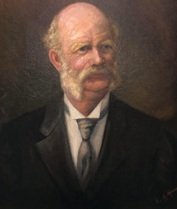
1858 – Hamilton Smith patents rotary washing machine.
1901 – First recorded use of “Getaway car” occurs after holding up a shop in Paris.
1934 – All India Rural Industries Association was established under the patronage of Mahatma Gandhi.
1943 – Cholera epidemic killed 2,155 people in the third week of October at Calcutta.
1947 – After the tribal column, raping and looting along the way by Pakistani Army continued at Baramul la, 50 kilometres from Srinagar. Maharaja of Jammu & Kashmir Hari Singhji, then signed the instrument of accession with India and the Indian Armed Forces reacted to the Pakistani Army’s infiltration. Great acts of personal gallantry and collective bravery were shown in the Kashmir operations. Major Som Nath Sharma was awarded the PVC, India’s highest decoration for valour, and Brigadier Usman, commanding the 50th Parachute Brigade, was awarded the MVC. Both the soldiers were awarded posthumously.
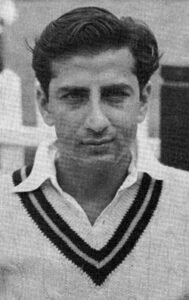 1952 – Pakistan’s first Test cricket win vs India. Fazal Mahmood took 12 wkts. for 94 runs. It was in the 2nd Test against India at Lucknow which India lost. Though Pakistan had lost the first Test by an Iniinings in Delhi earlier.
1999 – Supreme Court of India fixed the term of Life Imprisonment at 14 years.
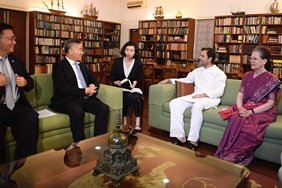
2005 – It was decided in 2005 to celebrate the year 2006 as the year of India-China friendship (pic credit-indiapost.com).
2006 – A min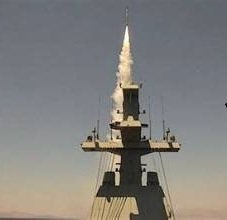 ister in Israel demanded an inquiry into the Barak deal from India.
2019 – Raid by US Special Forces kills ISIS founder and leader Abu Bakr al-Baghdadi  in Syria (pic credit-pinterest.com).
Born…. 1886 –Pt. Godabarish Mishra, famous Orria poet, playwright and patriot, called father of modern Oriya literature. He wrote many books, prominent was ‘अर्द्धशताब्दीर ओड़िशा ओ तहिंरे मो 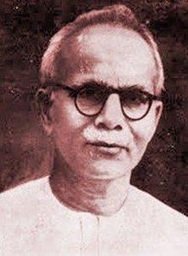 स्थान’. (Half a Century of Odissa and Place There). He was awarded Sahitya Akedmy Award in 1961 for this epic.
1937 – Pt. Hridaynath Mangeshkar, famous Indian music director and occasional si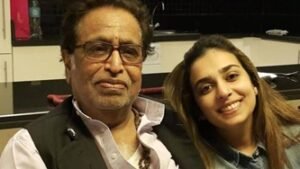 nger. He is the only son of musician Deenanath Mangeshkar and younger brother of late Lata Mangeshkar and Asha Bhosle (pic credit-citimuzic.com).
1947 – Hillary Clinton. Wife of former US president Bill Clinton and was later appointed as S ecretary of State by President Barack Obama. She faught Presidential election against Donald Trump in 2016 but lost. She has written several books on politics, social and family affairs (pic credit-BBC).
1972 – Raveena Tandon, Hindi film actress. Daughter of famous film director, producer Ravi Tanndon. She acted in over 60 films including Mohra, Barood, Daman, Aks, Dulhje Raj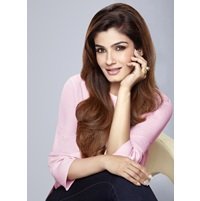 a, Ziddi, Vinashak, Dilwali, Khiladiyon ke Khiladi, Bombay Velvet, Hanuman Da, Shaab, One Friday Night, Ghudchadhi etc. She has won several awards; like National, Filmfare, and Padma Shri.
 RIP…. 1972 – Igor I. Sikorsky, was a Russian-born U.S. pioneer in aircraft design who is best known for his successful development of the helicopter. He was honored with several Russian and US space awards. (pic credit-Britannica). was a Russian-born U.S. pioneer in aircraft design who is best known for his successful development of the helicopter. He was honored with several Russian and US space awards. (pic credit-Britannica).
RIP….1990 – V. Shantaram, veteran film producer, director and Dadasaheb Phalke awardee. His is known for patriotic and social awareness theme films like Do Ankhe Barah Haath, Kunku, Subah ka Taara, Pinjara, Jhalak Jhalak Payal Baaje, Navrang, Boond Jo Ban Gayee Moti, (pic credit-Google Arts & Culture).
You may have known…. 1. More than two centuries before the development of the first pressure-resisting diving suits, the Renaissance inventor Leonardo da Vinci drew up plans for a diving suit that would, in theory, 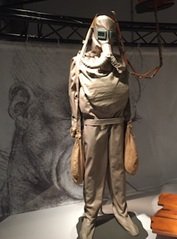 allow military divers to attack enemy ships from beneath the waves. Pipes connected the suit to a floating device, giving the diver access to air. This severely limited the range and depth of the suit, so Leonardo later considered installing bags of air directly on the suit. The suit was never used, but with its face mask and goggles, it closely resembled the diving suits that were designed centuries later.
2. Eyeglasses became popular in Chinese society during the late  13th century and early 14th century, and around the same period, rudimentary sunglasses featuring dark lenses made from smoky quartz were invented. While they protected against glare, they were also intended t
 o provide judges with an air of impartiality during trials by obscuring their eyes — and thus their emotional responses. {Compiled by Lt. Gen. (R) Raj Kadyan}

