
War has a catastrophic effect on the health and well-being of nations-I
Our regular Community Health contributor, *Dr Naresh Purohit-Fellow (Defence Institute of Psychological Research, New Delhi) and Advisor- National Mentral Health Programme, laments on the disastrous impact on human life and Society post West Asia war!
New Delhi: We may know the most common negative impacts of war which includes loss of human lives, economic losses due to the destruction of capital as well as disruption of trade, the spread of diseases, displacement of people, and destruction of the environment. But not many talk about the impact of the War on Mental Health. Let’s see it in detail about this issue.
War is generally defined as a violent conflict between states or nations : Nations go to war for a variety of reasons. It has been argued that a nation will go to war if the benefits of war are deemed to outweigh the disadvantages and if there is a sense that there is not another mutually agreeable solution. More specifically, some have argued that wars are fought primarily for economic, religious, and political reasons. Others have claimed that most wars today are fought for ideological reasons.
‘War does not determine who is Right – Only who is Left”: A traumatic event is a shocking, scary, or dangerous experience that affects you emotionally. During the war, people can be exposed to many different traumatic events. That raises the chances of developing mental health problems-like post-traumatic stress disorder (PTSD), anxiety, and depression-and poorer life outcomes as adults.
In some violent armed conflicts, children may be separated from their families and communities by armed groups. These “child soldiers” can witness or participate in killings and experience other traumatic events. In addition to the psychological trauma and physical injuries, many former child soldiers face rejection from family and community after the war.
Wars have had an important part in psychiatric history in a number of ways. It was the psychological impact of the world wars in the form of shell shock that supported the effectiveness of psychological interventions during the first half of the 20th century. It was the recognition of a proportion of the population not suitable for army recruitment during the Second World War that spurred the setting up of the National Institute of Mental Health in USA. The differences in the presentation of the psychological symptoms among the officers and the soldiers opened up new ways of understanding the psychiatric reactions to stress.
Though there have not been any world wars since the Second World War, there have been wars and conflicts throughout the last 60 years. For example, in the 22 countries of the Eastern Mediterranean region of the World Health Organization (WHO), over 80% of the population either is in a conflict situation or has experienced such a 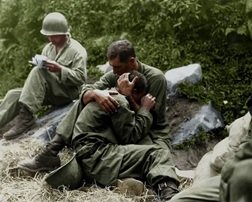 situation in the last quarter of a century.
War has a catastrophic effect on the health and well-being of nations. Studies have shown that conflict situations cause more mortality and disability than any major disease. War destroys communities and families and often disrupts the development of the social and economic fabric of nations. The effects of war include long-term physical and psychological harm to children and adults, as well as reduction in material and human capital. Death as a result of wars is simply the “tip of the iceberg”. Other consequences, besides death, are not well documented. They include endemic poverty, malnutrition, disability, economic/ social decline and psychosocial illness, to mention only a few. Only through a greater understanding of conflicts and the myriad of mental health problems that arise from them, coherent and effective strategies for dealing with such problems can be developed.
War and armed conflict causes a significant loss to human life and is a major cause of disability worldwide. In addition to those hurt and killed as a direct result of violent conflict, a vast amount of people are also negatively impacted by the wider effect of war on global health. War diverts essential and often scarce resources from those who need it to survive towards the war effort. It also damages the infrastructure put in place to support healthcare. War forces people to flee their homes in search of safety, with the latest figures from the UN estimating that around 70 million people are currently displaced due to war. This displacement can be incredibly detrimental to health, with no safe and consistent place to sleep, wash, and shelter from the elements. It also removes a regular source of food and proper nutrition. As well as impacting physical health, war adversely affects the mental health of both those actively involved in conflict and civilians.
War causes civilians to leave their homes in search of safety. Recent data estimates that there are currently 70 million people who have lost their homes due to conflict. These displaced populations are at a greater risk of disease and illness. In particular, refugees are at an elevated risk of contracting infectious diseases. Recent research has reported the prevalence of various infectious diseases in refugee and asylum seeker populations: latent tuberculosis (9–45%), active tuberculosis (up to 11%), and hepatitis B (up to 12%).
The importance that the WHO attributes to dealing with the psychological traumas of war was highlighted by the resolution of the World Health Assembly in May 2005, which urged member states “to strengthen a ction to protect children from and in armed conflict” and the resolution of the WHO Executive Board in January 2005, which urged “support for implementation of programmes to repair the psychological damage of war, conflict and natural disasters”.
The WHO estimated that, in the situations of armed conflicts throughout the world, “10% of the people who experience traumatic events will have serious mental health problems and another 10% will develop behavior that will hinder their ability to function effectively. The most common conditions are depression, anxiety and psychosomatic problems such as insomnia, or back and stomach aches”. ——-(to be Continued)
In Part -II of the article Dr. Purohit, wades thru’ the History of Wars from Balkans to Cambodia, to Iraq, to Sri Lanka, and analyses the impact on Mental Health of War-torn Population; wounded and refugees, after the War ends!
———————————————————
*Dr. Naresh Purohit-MD, DNB, DIH, MHA, MRCP(UK), is an Epidemiologist,  Advisor-National Communicable Disease Control Program of Govt. of India, Madhya Pradesh and several state organizations.)
Dr. Purohit is also Principal Investigator for the Association of Studies For Kidney Care.
