
Today’s Motto: ‘Leave no path untaken’
BEST WISHES TO ALL OUR VIEWERS AND WELLWISHERS FOR A HEALTHY AND SATISFACTORY YEAR 2026 !
As Every Day makes a new beginning in life, it brings new opportunities, opens new avenues, to perform and make a mark, to write a Page in History Books !
This is Your Day-TODAY: Take a Determined Step Forward and Make History !
On this day, 01 Jan….
1772 – 1st Traveller’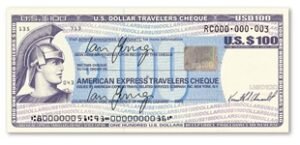 s Check issued in London.
1785 – The first edition of the newspaper The Universal Daily Register was published in London. Its name was changed to become The Times, by which it has been known to the present day.
1841 – Austrian inventor Friedrich Voigtländer began selling the world’s first purpose-built portrait camera.
1877 – England’s Queen Victoria proclaimed Empress of India. 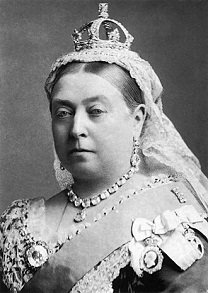
1862 – The Indian Penal Code (IPC) came into effect, a foundational law for criminal justice. It has now been rechristened as Bhartiya Nyay Sanhita 2023, (effected from July 01, 2024), by removing over a thousand redundant provisions.
1880 – Money o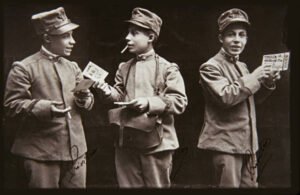 rder system was introduced (pic credit-Fototeca Gilardi/Getty Images.
1896 – German scientist, Wilhelm Röntgen announced his discovery of X-ray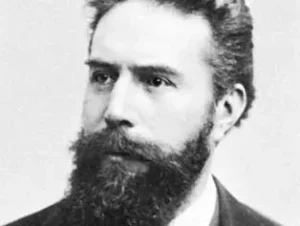 s. He detected electromagnetic radiation in a wavelength range known as X-rays.
1906 – In British India, all the railway and telegraph clocks were put at Indian Standard Time. It was set as the meridian passing through Allahabad at 82.5° east of the Greenwich Meridian longitude. The country had a single time zone, IST, at 5 hours and 30 minutes in advance of GMT. This was about 9 minutes faster than Madras time, and about 24 min slower than Calcutta time. However, Calcutta and adjoining areas, until 1948, kept a separate time zone, Calcutta LMT (Local Mean Time). {Pakistan kept IST for three years after its partition, then in 1951 introduced Pakistan Standard Time at 5 hours ahead of GMT}.
 1915 – Mohandas Karamchand (Mahatma) Gandhi received the ‘Kaiser-i-Hind’ medal from the Viceroy for his work in South Africa (though he returned it later). He worked as a Lawyer there and fought for Indian settlers/workers rights in South Africa.
1915 – Aspirin was made available for the first time in tablet form.
1946 – ENIAC, the first U.S. computer was finished by John Mauchly and J. Presper Eckert. Though not the first ever computer, ENIAC is regarded as the first successful, general digital computer. It weighed over 27,000 kg and contained more than 18,000 vacuum tubes.
1949 – A United Nations-brokered ceasefire took effect in Kashmir, halting the first Indo-Pak war. 1966 – Effective on this day, all US cigarette packages were mandated to car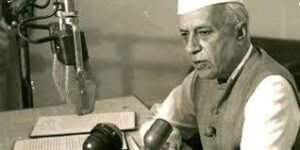 ry the health warning: Caution: Cigarette smoking may be hazardous to your health.
1976 – Broadcasting of Commercial Advertisements on Indian TV stations started. 1988 – The Indian Officers Training School (OTS), Madras, was re-christened as Officers Training Academy. 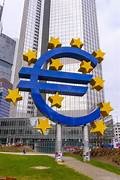 1992 – India and Pakistan exchanged lists of their nuclear facilities as per an agreement.
1999 – Euro currency is introduced in Europe, traded in about 28 European Union countri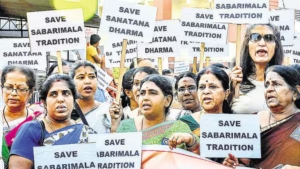 es.
es.
2019 – Thousands of women create a 385-mile ‘Women’s Wall’ across the state of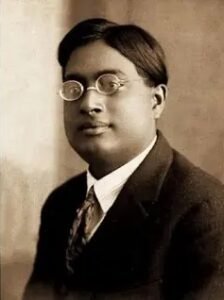 Kerala, in support of women’s access to the Sabarimala temple.
Born…. 1894 – Satyendra Nath Bose, Indian mathematician and physics expert; worked with Albert Einstein for some time. He worked with Albert Einstein to develop a theory of statistical quantum mechanics, now called Bose-Einstein statistics.
1950 – Rahat Indori (Qureshi), popular Bollywood lyricist and Urdu poet. He 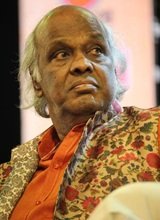 was also a former professor of Urdu language and a painter earlier.
1950 – Deepa Mehta, film actor, director known for roles in Fire, Water, Earth, Midnight’s Children, Funny Boys, Hollywood-Bollywood etc. She has won many Canadian Film awards, Cannes and others for her direction. 1951 – Nana Patekar, Marathi and Bollywood actor known for aggressive and bold dialogues in films like It’s My Life, Natsamrat, Andha Yudh, SP Suhas Dandekar, Trishagni, Awam, Col Mustafa Ali Zahidi, Salam Bombay, Parinda, Tiranga, Krantiveer, Hum Dono, Dharma etc. He has won 3 National Awards, 4 Filmfare and 2 Filmfare Marathi awards. 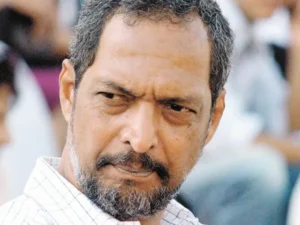
1975 – Sonali Bendre, model and actress, Worked in Bollywood and Telugu, Tamil films. Known for roles in Aag, Diljale, Duplicate, Murari, Sarfarosh, Ham Saath Saath Hain, Kal Ho Na Ho etc. She has won 11 awards, from 14 nominations in Filmfare and other accolades.
1978 – Vidya Balan, popular Bollywood actor who is known for Bhool Bulaiya, Dirty Picture, Kahaani, Do Aur  Do Pyaar, Shakuntala Devi, Mission Mangal, Lage Raho Munna Bhai, etc. She has won a National award, 7 Filmfare and others..
RIP…. 1944 – Sir Edwin Lutyens, the Builder of Rashtrapati Bhavan and England’s most outstanding 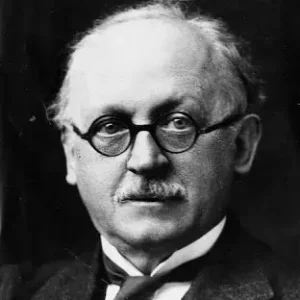 architect of his time. Was awarded Gold Medal of the Royal Institute of British Architects and other industry awards.
1966 – Bimal Roy, legendary film maker and producer. He is known for socialistic films 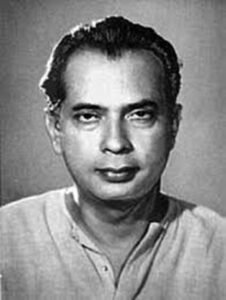 like Do Bigha Zamin, Prem Patras, Devdas, Biraj Bahu, Madhumati, Sujata, Bandini, Parakh, Yahudi, etc. He won 2 National, 11 Filmfare and one Cannes Film awards. Madhumati won 9 awards, an all time record.
1975 – Sha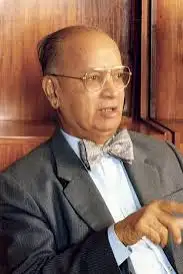 nkar Rao Vasudev Kirloskar, famous industrialist. Diversified and the industrial empire of his father Laxman Rao Kirloskar.
You may have known…. 1. Brahmagupta, born in 598 CE, likely in Bhillamala (modern Bhinmal, Rajasthan). An influential mathematician and astronomer, he revolutionized mathematics by developing concepts 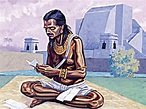 like the quadratic formula and work on cyclic quadrilaterals. He also established rules for arithmetic operations involving zero and negative numbers. He detailed these in his seminal work Brahmasphutasiddhanta (written around 628 CE).
2. An 1839 satirical article about grammar included an intentional misspelling of “oll ko rrect,” and the course of American English was changed. OK came into every day use.
{Compiled by Lt. Gen. (R) Raj Kadyan}

Comments are closed.