
PM Modi meets West Bengal MPs asks them to strongly counter TMC govt on ground
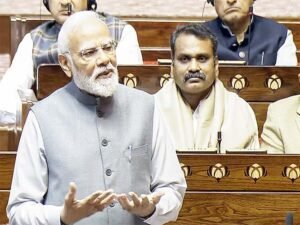 New Delhi : Prime Minister Narendra Modi met with the Bharatiya Janata Party (BJP) member of Parliament on Monday to discuss preparations for the upcoming 2026 elections. PM Modi also discussed the law and order in the state, saying that incidents of assault on MPs, such as on Khagen Murmu “must be highlighted effectively so that people understand the violence attributed to the TMC.” There are a total of 12 MPs in Lok Sabha and 2 MPs from West Bengal.
PM Modi said that the current situation in the state requires clear communication and public outreach, and the party must strongly counter what is happening on the ground.
PM Modi has also asked the MPs to begin preparing detailed presentations and ensure full groundwork for upcoming political planning and mobilisation for the 2026 assembly elections in the state.
The meeting of PM also comes amid the Trinamool Congress (TMC) launching a campaign to oppose the ongoing Special Intensive Revision (SIR) in the state. Chief Minister Mamata Banerjee repeatedly accusing the BJP and ECI of putting undue pressure on BLO, leading to various deaths and suicides. The House is also set to hold a discussion on electoral reforms, where the Opposition MPs are looking to raise the issue of SIR.
Parliamentary Affairs Minister Kiren Rijiju, earlier, informed that during the All Party Meeting Chaired by Lok Sabha Speaker, it was decided to hold a discussion in Lok Sabha on the 150th Anniversary of the National Song ‘Vande Mataram’ on December 8 and a discussion on election reforms on December 9.
Earlier on December 1, during the first day of the winter session, TMC MP Sagarika Ghose criticised the Centre and the Election Commission, saying that they have “blood on its hands.”
Speaking to reporters, Ghose said, “It is a humanitarian tragedy. Forty people have lost their lives in West Bengal. BLOs are committing suicide. The Election Commission has blood on its hands.”
Ghose further accused the government of avoiding accountability on the issue. “The government is refusing to give a timeline or assurances. They are refusing to discuss this urgent matter facing the nation.”

Comments are closed.