
Heat resilience, must be mainstreamed into National Health Programs
Commenting on Vector-borne and non-commincable diseases, our expert advisor on Community Health, *Dr. Naresh Purohit, advocates for a special emphasis on Heat Resilience generated by Climate changes
Kolkata/New Delhi: Heat resilience, must be mainstreamed into national health programmes covering maternal health, non ‑ communicable diseases and vector‑borne diseases, said Visiting Professor at the Kolkata based West Bengal University of Health Sciences, School of Public Health, Dr Naresh Purohit.
After virtually addressing a webinar on “Heat Resilient Health System For India, ” organised by the All India Institute of Hygiene and Public Health , Advisor for National Programme for Climate Change and Human Health (NPCCHH) – Dr Purohit informed NewsOnRadar.com that climate change is no longer a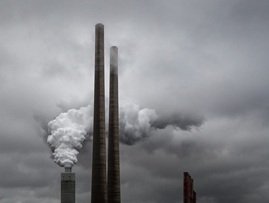 distant threat but a present‑day public health emergency for India. Air pollution remains the largest environmental threat to human health, he warned, contributing to nearly seven million premature deaths every year. Ultra fine particulate matter (PM2.5) penetrates vital organs and is linked to heart disease, strokes, cancer and dementia.
Renowned medic outlined urgent steps needed to build a heat‑ and climate‑resilient health system and urged to adopt climate‑ resilient building methods for the rapidly expanding city of joy.
While presenting the data of a research study, noted Epidemiologist Dr Purohit pointed that more than 59 per cent of Indian districts face high to very high heat risk, and urban areas can be 5°C to 10°C hotter than surrounding regions because of the urban heat island effect. Rising night time temperatures are especially dangerous as they prevent the body from recovering from day time heat stress. Globally, heat‑related deaths now exceed 5.5 lakh  annually, a figure he said is likely an underestimate.
“Every 10 microgram reduction in particulate matter 2.5 can cut all‑ cause mortality by 8.6 per cent,” he observed.
Experts emphasised that climate action must be gender‑transformative and community‑ driven. “Climate action requires 100 per cent participation. Empowering women leads to better climate solutions,” they said.
Experts called for replacing the National Clean Air Programme with a stronger, science‑ led National Clean Air Mission to achieve acceptable air quality within five years, expanding the focus beyond cities to entire airsheds and prioritising clean fuels, strict emission enforcement, better public transport, dust control, greening of cities and stronger pollution control boards.
They recommended integrating heat preparedness into primary healthcare, setting up cool rooms in health facilities, redesigning clinical protocols to avoid misdiagnosis of heat‑related illnesses, and training health workers at all levels to respond to climate risks.
*Dr. Narresh Purohit-MD, DNB, DIH, MHA, MRCP(UK), is an Epidemiologist,  and Advisor-National Communicable Disease Control Program of Govt. of India, Madhya Pradesh and several state Health organizations. Dr. Purohit is also Chief Advisor -Hospitals Association of India and Chief Investigator Association of Studies for Kidneycare.

Comments are closed.