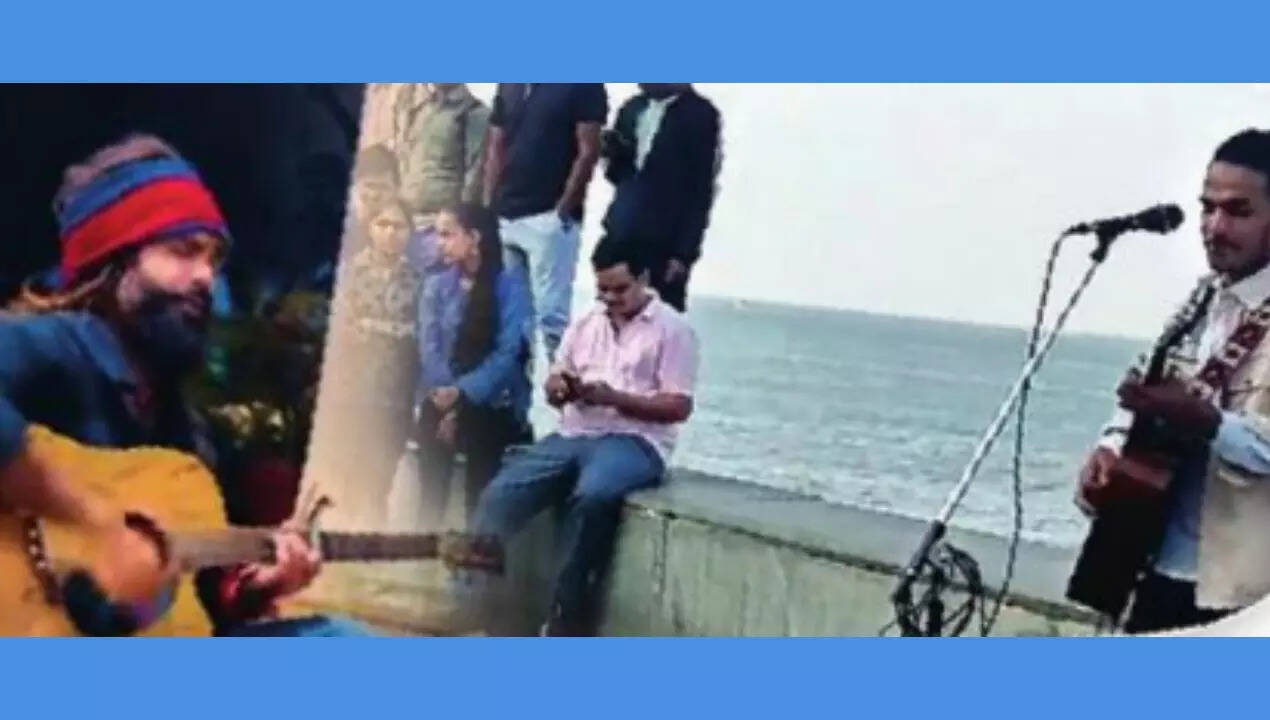
![]() You hear them before you see them, and when you do, you’re likely to stop in your tracks and sing or tap along with these nameless street artistes or ‘buskers’, as they’re commonly called, who are increasingly living up India’s publicspace. From parking lots, mall and metro gates to the likes of Delhi’s Connaught PlaceMumbai’s Carter Road or Bengaluru’s Church Street, buskers have been popping up and turning the street into their stage — some to express their love for an art, some for a big break and some to make a living out of serenading strollers with their sidewalk melodies.Yet, the art of performing spontaneously on the streets — a thriving culture in the West and a new musical phenomenon in Indian cities, thanks in part to videos of so many of these performances going viral — has come under threat with buskers being arrested, fined , their instruments confiscated, and being pretty much criminalized for simply playing music in the outdoors. on New Year’s Evethe performance of Anshul Riaji — who has been a fixture at Delhi’s Connaught Place for close to four years, strumming his guitar and belting out love and spiritual ballads — was brought to a disturbing halt. In a video that did the rounds on social media, the self-styled singer-songwriter was seen being shooed away by a cop who grabbed his wrist and threatened him into submission.Fellow CP busker Varun Dagar has been at the receiving end of similar treatment. “I’ve been hauled to the police station at least 30 times,” says Dagar, who started busking as a way to test his freestyle dance moves in a non-judgmental setting after he ran away from his home in Palwal, Haryana and Arrived in Delhi six years ago. “I perform on the street for my art to be seen. People give me money out of their own will, I don’t ask for it. It’s a token of their appreciation. And yet the police or municipal corporation guys think it’s something homeless beggars do. I’ve also struggled to get back my speaker and guitar that they seized.”The hostility towards Riaji and Dagar are not isolated cases. Across the country, buskers that TOI spoke to say that they routinely face clampdowns by police and local authorities.Despite run-ins with the law, they haven’t allowed it to dim their shine. “We may not have a fixed income or a formal stage, but we have passion for our art and love of our audience,” says Riaji who returned to another s pot at CP within a few days. A lighting product designer by day and a street performer by night, Riaji sees busking as a viable way of making it as an independent artiste when music venues hesitate to o pen up to those that don’t conform to the cliched “live-music formula “.Dagar says busking saved his life. “Growing up in a Jat family in Haryana, friends and family made fun of my singing and dancing,” recounts the 25-year-old. He won’t divulge how much money he makes in tips but says he managed to move out of the shelter at Gurdwara Bangla Sahib to a rental room in Chhatarpur from performing for three hours, five times a week.Perhaps the first lesson Krishnendu Banerjee and Soumyojyoti Chatterjee — a singer-violinist busking duo in Kolkata who call themselves Third Stage — learned is that no two nights on the job look the same. “We love the human connection that a street stage allows,” says Banerjee. These ‘full-time professional buskers’ now perform five days a week on street corners, outside metro stations, near popular monuments and at fairs. “We make anything between Rs 5,000 to Rs 18,000 in a day depending on weather, location, and season.”And, of course, the whims of the police. “We’ve been asked to produce written permission from the Lalbazar police headquarters. But how can we, when there’s no law or provision in our country for ‘busking’?”Originally from Chitradurga, Karnataka, Mohammed Shakeel, 25, moved to Bengaluru to find a way to fund his music school fees and busking seemed like an option. “I borrowed some money from my father, gathered some equipment and guts, landed on Church Street, closed my eyes and sang ‘Sun mere humsa far’,” recalls Shakeel who opened his eyes to claps and around Rs 6,000 in his guitar case. It was a great beginning but then the pandemic hit. “Most buskers like me started live-streaming performances on social media where appreciative listeners would tip. It’s the best we could do,” says Shakeel who returned to busking this year in Mumbai, fetching him offers to gig at private events alongside fines and arrests for performing on the street.Buskers might have their instrument cases expectantly open “but we aren’t just performing for loose change,” adds Sachin Faujdar, a 26-year-old BA graduate turned busker from Jaipur who carries his guitar, mic and a board that reads ‘I am an artist, not a beggar’ wherever he sets up stage to belt out old Bolly wood hits. Buskers say it’s time they were granted the dignity of performing artistes. “And from our end, we can ensure that our music amplifiers aren’t too loud and we don’t create obstructions,” says Shakeel.BRINGING MELODY TO MEGHALAYAFrom bazaars and busy road junctions to parks and waterfronts, the streets of Meghalaya are alive with the sound of music — buskers — to be precise, and Pearly Amelia, an 11-year-old girl who can switch with ease from Billie Eilish’s whispering vocals to Astrid S’s pop hits, is perhaps one of the youngest star attractions. Impromptu street gigs — seen as a public nuisance in other Indian cities — are being promoted in this north-eastern state as an essential part of the experience and identity of its streets. Around 300 bands and soloists have been inducted into the official music rolls since May last year as part of the Meghalaya Grassroots Music Project, an initiative by the state tourism department.
You hear them before you see them, and when you do, you’re likely to stop in your tracks and sing or tap along with these nameless street artistes or ‘buskers’, as they’re commonly called, who are increasingly living up India’s publicspace. From parking lots, mall and metro gates to the likes of Delhi’s Connaught PlaceMumbai’s Carter Road or Bengaluru’s Church Street, buskers have been popping up and turning the street into their stage — some to express their love for an art, some for a big break and some to make a living out of serenading strollers with their sidewalk melodies.Yet, the art of performing spontaneously on the streets — a thriving culture in the West and a new musical phenomenon in Indian cities, thanks in part to videos of so many of these performances going viral — has come under threat with buskers being arrested, fined , their instruments confiscated, and being pretty much criminalized for simply playing music in the outdoors. on New Year’s Evethe performance of Anshul Riaji — who has been a fixture at Delhi’s Connaught Place for close to four years, strumming his guitar and belting out love and spiritual ballads — was brought to a disturbing halt. In a video that did the rounds on social media, the self-styled singer-songwriter was seen being shooed away by a cop who grabbed his wrist and threatened him into submission.Fellow CP busker Varun Dagar has been at the receiving end of similar treatment. “I’ve been hauled to the police station at least 30 times,” says Dagar, who started busking as a way to test his freestyle dance moves in a non-judgmental setting after he ran away from his home in Palwal, Haryana and Arrived in Delhi six years ago. “I perform on the street for my art to be seen. People give me money out of their own will, I don’t ask for it. It’s a token of their appreciation. And yet the police or municipal corporation guys think it’s something homeless beggars do. I’ve also struggled to get back my speaker and guitar that they seized.”The hostility towards Riaji and Dagar are not isolated cases. Across the country, buskers that TOI spoke to say that they routinely face clampdowns by police and local authorities.Despite run-ins with the law, they haven’t allowed it to dim their shine. “We may not have a fixed income or a formal stage, but we have passion for our art and love of our audience,” says Riaji who returned to another s pot at CP within a few days. A lighting product designer by day and a street performer by night, Riaji sees busking as a viable way of making it as an independent artiste when music venues hesitate to o pen up to those that don’t conform to the cliched “live-music formula “.Dagar says busking saved his life. “Growing up in a Jat family in Haryana, friends and family made fun of my singing and dancing,” recounts the 25-year-old. He won’t divulge how much money he makes in tips but says he managed to move out of the shelter at Gurdwara Bangla Sahib to a rental room in Chhatarpur from performing for three hours, five times a week.Perhaps the first lesson Krishnendu Banerjee and Soumyojyoti Chatterjee — a singer-violinist busking duo in Kolkata who call themselves Third Stage — learned is that no two nights on the job look the same. “We love the human connection that a street stage allows,” says Banerjee. These ‘full-time professional buskers’ now perform five days a week on street corners, outside metro stations, near popular monuments and at fairs. “We make anything between Rs 5,000 to Rs 18,000 in a day depending on weather, location, and season.”And, of course, the whims of the police. “We’ve been asked to produce written permission from the Lalbazar police headquarters. But how can we, when there’s no law or provision in our country for ‘busking’?”Originally from Chitradurga, Karnataka, Mohammed Shakeel, 25, moved to Bengaluru to find a way to fund his music school fees and busking seemed like an option. “I borrowed some money from my father, gathered some equipment and guts, landed on Church Street, closed my eyes and sang ‘Sun mere humsa far’,” recalls Shakeel who opened his eyes to claps and around Rs 6,000 in his guitar case. It was a great beginning but then the pandemic hit. “Most buskers like me started live-streaming performances on social media where appreciative listeners would tip. It’s the best we could do,” says Shakeel who returned to busking this year in Mumbai, fetching him offers to gig at private events alongside fines and arrests for performing on the street.Buskers might have their instrument cases expectantly open “but we aren’t just performing for loose change,” adds Sachin Faujdar, a 26-year-old BA graduate turned busker from Jaipur who carries his guitar, mic and a board that reads ‘I am an artist, not a beggar’ wherever he sets up stage to belt out old Bolly wood hits. Buskers say it’s time they were granted the dignity of performing artistes. “And from our end, we can ensure that our music amplifiers aren’t too loud and we don’t create obstructions,” says Shakeel.BRINGING MELODY TO MEGHALAYAFrom bazaars and busy road junctions to parks and waterfronts, the streets of Meghalaya are alive with the sound of music — buskers — to be precise, and Pearly Amelia, an 11-year-old girl who can switch with ease from Billie Eilish’s whispering vocals to Astrid S’s pop hits, is perhaps one of the youngest star attractions. Impromptu street gigs — seen as a public nuisance in other Indian cities — are being promoted in this north-eastern state as an essential part of the experience and identity of its streets. Around 300 bands and soloists have been inducted into the official music rolls since May last year as part of the Meghalaya Grassroots Music Project, an initiative by the state tourism department.


Comments are closed.