
‘AI Impact Summit sees India emerging as key player on global stage’
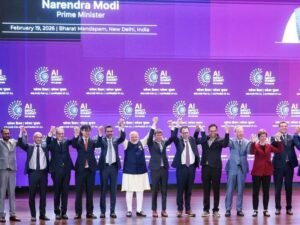 New Delhi : The AI Impact Summit held in New Delhi has turned out to be a landmark event with world leaders and innovators recognising India’s growing capabilities and potential to play a key role in the new technological era, as per a report.
India has given a distinctive thrust to the goal for inclusion as the world is poised for the big AI leap ahead and grapples with the ethical issues that need to be tackled, according to an article in Eurasia Review.
“A country once described mainly as the world’s back office now seeks to help shape the architecture of a new technological era,” it said.
Artificial intelligence is the great ocean of our time. India cannot afford to withdraw from it. But it must also ensure that the journey is shared, the article stated.
It cites the example of computerisation being introduced into Indian banking and the railways in the 1980s, which triggered widespread anxiety about job losses. Over time, however, technology improved efficiency, expanded services, and created new categories of employment. The transition required adaptation and retraining, but it ultimately strengthened these sectors.
If deployed thoughtfully, AI can become a force for educational equity. A student in a remote village who lacks access to a specialised teacher can receive guided explanations and structured practice through digital platforms. Learning materials can be adapted to individual pace and progress. Students who hesitate to ask questions in crowded classrooms may find confidence in interactive systems that respond patiently and repeatedly, the article observed.
Language barriers can also be reduced. Much advanced educational content remains concentrated in English, creating structural disadvantages for first-generation learners. AI-driven translation and voice tools can deliver complex knowledge in regional languages, widening access without eroding cultural identity. In a multilingual country, this possibility is transformative, the article pointed out.
It highlights that empowering teachers is also crucial. AI should not be viewed as a replacement for educators. The essence of teaching — mentorship, empathy and moral guidance — remains deeply human. However, technology can reduce routine burdens such as record maintenance and basic assessments. By easing repetitive tasks, AI can allow teachers to devote more time to discussion, creativity and personal guidance. By easing repetitive tasks, AI can allow teachers to devote more time to discussion, creativity and personal guidance. In this role, technology becomes a partner rather than a substitute.
The article points out that there are problems. The digital divide persists as reliable electricity, internet connectivity, and device availability are uneven across regions. Without sustained investment in infrastructure, the promise of AI-enabled learning will remain incomplete.
Concerns about data privacy and excessive reliance on automated answers must also be addressed through careful policy design. Students should learn to question technology and apply judgment, not accept outputs uncritically.
However, constructive steps are already underway. The National Education Policy 2020 seeks to promote foundational literacy, flexibility and multidisciplinary learning. The PM SHRI initiative aims to develop model schools equipped with modern facilities and innovative teaching practices. These efforts reflect a forward-looking approach. Yet, given the scale of India’s public education system, expansion and deeper integration will be necessary to ensure that progress reaches every district and block, the article further stated.
The broader objective should be clear: to align technological ambition with social inclusion. India’s global engagement in AI strengthens its economic prospects and diplomatic standing. The next phase is to embed that ambition within the everyday realities of the common classroom, it added.

Comments are closed.