
A Psychological Evolution In The Architecture Of Extremism, Collapse of Professional Trust….
.......Context Delhi Red Fort Blast
Our Community Health Expert, *Dr Naresh Purohit (Advisor- National Mental Health Programme), pained at the recent terror acts of his professional clan in White Coats, ponders over dangers of polluted minds of those Sworn to Serve the Humanity !
New Delhi: The November 10 Red Fort Delhi blast has exposed a disturbing reality that India can no longer ignore. Terrorism has evolved from armed militants in border areas to educated professionals in white coats working in the heart of our cities. For decades, Indian society comforted itself with the belief that education was an an tidote to extremism. If you gave people degrees, jobs, and security, they wouldn’t turn to violence. But the recent events have cracked that illusion wide open. The case has come to symbolise something darker than terrorism alone – the corrosion of trust in the very people we consider pillars of society.
The enemy no longer comes from the outside or the borders; he exists within systems, fluent in their rhythms and invisible within their hierarchies. A doctor with access to chemicals doesn’t need smuggling routes. A software engineer can encrypt entire networks. A university lecturer can radicalise dozens of minds under the guise of debate.
Doctors are meant to be rational, guided by ethics, insulated from the hysteria that feeds violence. And yet, this group—articulate, credentialed, financially comfortable—was allegedly plotting in quiet apartments and laboratories.
What makes such individuals so dangerous is not just their intellect but their access. A doctor understands anatomy, ch emistry, and discipline — skills that transfer seamlessly into designing harm. They know how to keep secrets, follow protocols, and think clinically under pressure. When ideology fuses with that kind of precision, terror takes on a terrifying professionalism.
This is what makes educated radicals the most elusive; they blend into urban life, occupy positions of trust, and communicate in ways that escape old surveillance models.
History shows that intellect can coexist with extremism. In each case, the perpetrators weren’t driven by poverty but by belief—by a moral logic turned inward, sharpened by grievance. In India, too, the pattern has begun to surface: the radicalised professional, the student who studies medicine by day and consumes extremist propaganda by night. Radicalisation has moved from the margins to the mainstream, from isolated seminaries to social media groups, encrypted chats, and quiet study circles in professional campuses.
The new terrorist doesn’t emerge from the ruins of poverty but from the corridors of privilege. He has a degree, a savings account, and a reason that sounds, to him, like righteousness. He doesn’t shout slogans; he crafts manifestos. He doesn’t flee to the border; he hides in plain sight. And that is what makes this generation of extremists so unnervingly dangerous, they are not the monsters we were warned about.
The New Face of Terror:
This incident of Delhi Red Fort blast has revealed a frightening new pattern where
terror has put on a white collar.
White Collar terrorism which refers to acts of violent extremism or radical activity planned by educated skilled professionals such as doctors, engineers or academics.
Here in the present incident they are doctors who treat patients during the day and plan mass murder at night. They hold respectable positions in hospitals and medical colleges. They speak both the language of science and the language of hate.
The white collar terror module shows how terrorism is changing in India. The enemy no longer just come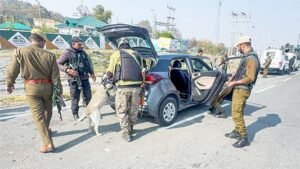 s from across the border with guns. The enemy can be sitting in a hospital, wearing a white coat, with access to labs and chemicals. This makes detection extremely difficult because these people do not fit the traditional profile of terrorists. Security experts say this is the biggest challenge for Indian intelligence agencies. The usual surveillance methods do not work on educated, professional people who know how to avoid detection.
The biggest question is how such a large terror network operated for so long without being detected.
It is to be noted that terrorists no longer need physical training camps. They can be radicalized sitting at home, watching videos, and reading messages on encrypted apps.
White Coats On The Radar:
Dr Muzammil Ahmad Ganaie (alias “Musaib”): A doctor from Pulwama, Jammu & Kashmir, employed at Al Falah School of Medical Sciences & Research Centre (Faridabad).
-Dr Shaheen Sayeed (Shahid) (often reported as “Shaheen Shahid” or “Shaheen Sayeed”) . A doctor originally from Lucknow, reportedly also working at Al Falah. She is alleged to have been tasked with forming a women’s recruitment wing of Jaish‑ e‑ Mohammed (“Jamaat‑ul‑
Mominat”). Dr Shaheen Sayeed (Shahid) (often reported as “Shaheen Shahid” ).
-Dr Umar Mohammad (also cited as “Umar Nabi” or “Dr Umar Un
Nabi). A doctor from Pulwama, reportedly driving the Hyundai i20 car that exploded near the Red Fort.
-Dr Adeel Ahmad Rather: Doctor from Anantnag, Jammu & Kashmir; reportedly arrested in connection with the module with ties to Jaish-e – Mohammed and Ansar Ghazwat-ul-Hind. He reportedly hid an AK-47 in his locker and was part of a cross-state network spanning J&K, Haryana, and UP.
Managing the Situation:
– Ethics-based education reform: Include moral reasoning and civic empathy in all levels of schooling.
-Community and family vigilance: Encourage early detection of radical behaviour through social counselling.
-Targeted De-radicalisation therapy: Use psychological counselling and social reintegration to counter extremist pull.
– Digital monitoring with safeguards: Employ AI tools to flag extremist content while protecting privacy rights.
– Strengthen professional accountability: Enforce strict ethical codes and disciplinary oversight in high-risk sectors.
eg: The National Medical Commission 2023 introduced mandatory ethics modules for doctors.
– Promote civic dialogue and inclusion: Provide legitimate forums for dissent to prevent ideological isolation.
eg: District-level youth councils in J&K reduced radicalisation through debate spaces.
White-collar terrorism shows that conviction, not ignorance, fuels extremism. India needs to counter it through ethical education, digital vigilance, and civic inclusion to neutralise both bombs and belief.
This new terror module challenge is stark, but India’s capacity for resilience and adaptation remains its greatest strength. By confronting this new architecture with ingenuity, integration, and inclusive vigilance, the nation can ensure that the thousand cuts of terror are not met with fear but with a stronger, more resilient fabric of public life. This evolving threat is not merely a security challenge but a test of societal cohesion—a reminder that the shadows of terror cannot obscure the light of collective resolve.
*Dr. Narresh Purohit-MD, DNB, DIH, MHA, MRCP(UK), is an Epidemiologist, 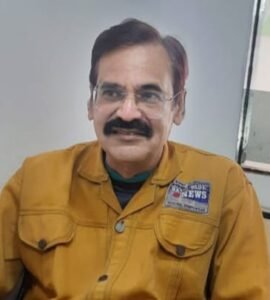 and Advisor-National Communicable Disease Control Program of Govt. of India, Madhya Pradesh and several state Health organizations. He’s the Principle Investigator – Association of Studies In Behavioural Science), Dr. Purohit is also Advisor-National Mental Health Program .

Comments are closed.