
Today’s Motto: ‘Lower your expectations, avoid disappointments’
As Every Day makes a new beginning in life, it brings new opportunities, opens new avenues, to perform and make a mark, to write a Page in History Book !
This is Your Day-TODAY: Take a Determined Step Forward and Make History !
On this day, 04 Nov ….
1822 – Water supply scheme formally launched in Delhi under MCD wing Delhi Jal Board (pic credit-orderofindia.com).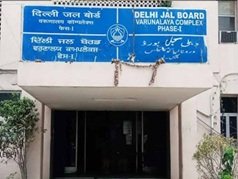
1845 – Michael Faraday, working in his laboratory at the Royal Institution, hung a piece of heavy glass between the poles of an electromagnet and observed that the glass aligned itself across the lines of force of the magnet. He further experimented on many other substances, with similar results, a phenomenon that he named diamagnetism. These investigations showed Faraday that magnetism was inherent within matter. This led to his lecture “Thoughts on  Ray-vibrations” in April 1846, which he expanded in the following years into his field theory of electromagnetism.
1846 – The first U.S. patent for an artificial leg was granted to Benjamin F. Palmer of Meredith, New Hampshire. The leg had a pliable joint that worked noiselessly and preserved its contour in all positions.
1869 – The first issue of the journal Nature was published, edited by astronomer Sir Joseph Norman Lock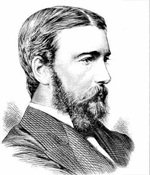 yer (pic credit-londonidst.com).
1873 – The first U.S. patent for a Gold Crown was issued to Dr. John B. Beers of San Francisco, California, on “artificial crowns for teeth”.
1879 – James Jacob Ritty, with help from his brother John, invented the first cash register to combat bartenders stealing at the Pony House Restaurant, his Dayton, Ohio saloon. His idea came on a cruise, when he saw a device that counted the revolutions of the ship’s propeller. Their
first model looked like a clock, but instead of the hands indicating hours and minutes, they indicated dollars and cents. Behind the dial,  two adding discs accumulated the total of the amounts recorded. Known as “the incorruptible cashier,” with no cash drawer, it would show anyone within sight how much had been recorded. However, the Ritty brothers failed to sell their cash registers in large quantities – largely because shop staff distrusted this “thief trap”.
1879 – African-American dentist, surgeon, pharmacist and inventor Thomas Elkins patented a refrigerating apparatus designed for chilling or cooling food, or even, according to the patent, human corpses. A porous chilling box enveloped in fabric rests on a grated floor through which a circulation of air aids the evaporation of water supplied from a trough to the fabric. As the water evaporates, latent hea t is withdrawn from the chilling box (pic credit-samepassage.org).
1922 – The entrance to King Tutankhamen’s tomb was discovered in Egypt in the Valley of the Kings, where the English archaeologist Howard Carter had been making extended excavations. One of Carter’s labourers stumbled upon a stone step, the first step in a sunken stairway that r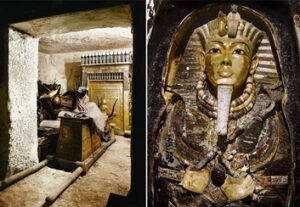 an down into the rock. Later in the month, Carter opened the virtually intact tomb of the largely unknown child-king Tutankhamen, who became pharaoh at age 9 and died at 19 (pic credit-boshidora.com).
1939 – The first air-conditioned automobile was exhibited by its manufacturer, Packard Motor Co. of Detroit, Michigan.
1946 – The United Nations Educational, Scientific and Cultural Organisation (UNESCO) Constitution became effective. The Preamble of its Constitution declares: “Since wars begin in the minds of men, it is in th e minds of men that the defences of peace must be constructed.” It currently has 188 Member States and 5 Associate Members. Its main objective is to contribute to peace and security in the world by promoting collaboration among nations through education, science, culture and communication. UNESCO provides for the advancement, transfer, and sharing of knowledge, relying primarily on research, training, and teaching activities. It has headquarters in Paris, France.
1947 – Indi a and Pakistan accuse each other of violating their neutrality agreement in the Kashmir dispute as Indian troops invade the state. Yet Pakistan had already sent its forces in the garb of civilian kabaylis (Lashkar militias from Waziristan) on Oct. 22, 1947 and had captured almost half of the state of J&K. Indian forces reached Srinagar after Maharaja Hari Singh signed the Documernt of Accession into India on Oct. 26, 1947. Still a third of the area is under Pak control and is called POK (Pak Occupied Kashmir).
1948 – The Constituent Assembly of India met in New Delhi with Dr. Rajendra Prasad in the Chair. Later he was selected as the first President of India.
1954 – The Institute of Himalayan Mountaineering in Darjeeling was established. The first Indian-Nepalese sherpa Tenzing Norgay was the first Director of the insitute
1997 – The Army’s Off Signal at Siachen Base Camp made the world’s highest STD Booth set up.
1998 – Paramj eet Singh upstages Milkha Singh’s 38-year-old 400m record at the national open athletic championship at Calcutta.

Born…. 1618 – Aurangzeb, the 6th Mughal King of India who rulede beteween 1958 -1707. He was the son of Shah Jahan and was very cruel to his citizens especially Hindus and non-muslims. He even put his father in jail in his last days.
1929 – Shakuntala Devi, Indian computer and mathematics wizard, astrologer who demonstrated her gift as an arithmetical prodigy in public performances (beginning at age 6 years old), rapidly computing answers to addition of several up to 13-digit numbers. Using her mental skills, she applied shortcuts using mathematical algorithms, though she could not explain that ability. Her calculations included using large numbers in multiplication and division. She also quickly gave square and cube roots, and could name the day of the week for any date in the last century.
1965 – Milind Soman, model, actor, producer and fitness freek. Made his debut thru’ Alisha Chenoy’s music videos  Made in India in 1995, followed by TV series A Mouthful of Sky, Captain Vyom, Fear Factor: Khatron Ke Khiladi, Ghost Bana Dost etc. He acted in Tarkieb, Pyar Ki Dhun, 16 December, Surya, Bhagmati, Bheja Fry, Bhram, Bajirao Mastani, Satyamev Jayate etc.
1971 – Tabassum Fatima Hashmi (Tabu), an actress who primarily works in Hindi films, a longside Telugu and Tamil language films. She has often played troubled, complicated women in a range of characters, from fictional to literary, in both mainstream and independent cinema, as well as some American productions. Debuted in Hum Naujawan by evergreen actor/producer Dev Anand and Virasat, Hu Tu Tu, Astitva. Maachis, Chandni Bar, Jawani Jaaneman, Taal, Drishyam 2,
 Bhool Bhulaiyan 2, Kutte, House of Spies, Chini Kum etc. She has won 2 National, 7 Filmfare awards, Padam Shri and several others including Tamil, Telugu film awards. Tabu also acted in 2 Hollywood films Life of Pi, The Namesake.
RIP….1970 – Pandit Shambhu Maharaj, was a famous guru and dancer of the Indian classical dance form Kathak. He belonged to the Lucknow gharana. His real name was ‘Shambhunath Mishra’. By singing thumri with dance, Shambhu Maharaj used to display his expressions in such a way that the audience remained enchanted for hours. He was honoured with Padma Shri and Sangeet Natak Akademi awards. 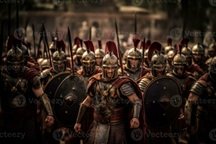
You may have known…. Roman soldiers were given an allowance for salt purchase — a salārium. That eventually made its way into Anglo-French as salarie, and later borrowed into  English as “Salary.”
2. Indian Languages: Many of the principal languages of India belong to two families, the Indo-European and the Dravidian. Also, three languages of the Sino-Tibetan family have official status in the northeastern region of the country.

The Dravidian languages are unique to the Indian subcontinent. They are often spoken in the South of the country. Hindi, an Indo-European language, is the most widely spoken language. Hindi has various different dialects.
Other major languages of India are Bengali, Marathi, Kannada, Punjabi, Oriya, Malayalam, Gujarati. However, 350 million Indians speak English as a second language and much of the upper middle class in large cities speak English as the usual language for daily communication. Punjabi has been  spoken by over 150 million Indians, Sikhs, and Punjabis worldover. .
{Compiled by Lt. Gen. (R) Raj Kadyan}

