
Civilizations preserve distinctiveness by engaging: EAM Jaishankar on India’s traditional knowledge heritage
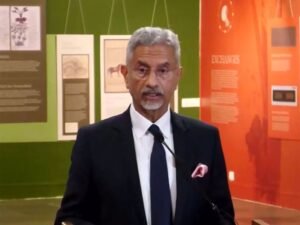 New Delhi : External Affairs Minister S Jaishankar highlighted the importance of preserving India’s traditional knowledge and manuscript heritage, saying that “civilizations perceive and preserve their distinctiveness not by remaining sealed off but by engaging from a position of confidence.”
Speaking at the inauguration of the exhibition “Nirāmayatā: Healing and Wellbeing in South Asian Texts and Practices” on Monday at the India International Centre (IIC) in New Delhi, Jaishankar emphasised the role of the Samhita Initiative in preserving, documenting and making accessible the manuscript traditions of the Indian subcontinent.
“I am very pleased today to see and go around this exhibition, which draws upon the Samhita Initiative, which is helping to preserve, document and make accessible the manuscript traditions of the Indian subcontinent. These are efforts that deserve our appreciation because they not only enable us to safeguard our intellectual heritage but in many ways also to rediscover its depth and relevance,” he said.
Explaining the significance of the exhibition, Jaishankar said it was not merely about medicine but about understanding how earlier generations perceived the human condition and developed systems of knowledge to sustain life in harmony with nature.
“In that sense, it’s not just simply an exhibition about medicine. It is really an exhibition about the civilizational understanding of the relationship between the individual, society, and the natural world, and, as Ambassador Shyam Saran said, in a way, between body and mind as well,” he added.
Highlighting the history of healing and wellness in the subcontinent, Jaishankar said traditional knowledge developed through observation, reflection and practice, encompassing Vedic hymns, Buddhist monastic traditions and specialised texts on surgery, pharmacology and therapeutics.
“The Samhitas represent an important milestone in the systematization of this knowledge because they bring together accumulated experiences and organize it into a framework that can be studied, taught, and transmitted,” he said.
He noted that traditional systems of knowledge addressed broader questions concerning health, including the relationship between physical vitality and mental tranquillity, the body’s response to the environment and the prevention of diseases.
“These are questions that went beyond the immediate task of curing an ailment, and they represent a much more comprehensive understanding of human well-being, and that today, in many ways, has become the mainstream thinking in much of the world,” Jaishankar said.
Emphasising the role of cultural and intellectual exchanges, the External Affairs Minister said medical knowledge travelled along pilgrimage routes and trade networks, while Sanskrit texts were translated into different languages and practitioners developed new techniques, medicinal substances and pharmaceutical practices.
“There is therefore a very important lesson here today for all of us, and that is that civilizations perceive and preserve their distinctiveness not by remaining sealed off but by engaging from a position of confidence, and our own history, as you can see, offers ample evidence of that proposition,” he said.
Jaishankar also stressed that manuscripts were more than repositories of information, as they recorded how societies thought, experimented, organised institutions and transmitted knowledge across generations.
He cautioned that languages, scripts and traditions of interpretation could erode over time, putting entire bodies of knowledge at risk, and underscored the importance of preserving, protecting and improving access to manuscripts.
“The task before us is to preserve these materials but equally to make them meaningful to contemporary audiences, and that is best done through a process of access and awareness and display,” he said, adding that digitisation, cataloguing, scholarly collaboration and public exhibitions could contribute to these efforts.
Jaishankar also highlighted the potential of artificial intelligence in preserving and restoring manuscripts and improving access to them. Referring to the exhibition’s potential to reach wider audiences, he said he would be interested in exploring ways to provide such initiatives with greater international circulation and exposure.
In a post on X on Monday, Jaishankar said he was “Delighted to inaugurate the exhibition ‘Nirāmayāta: Healing and Wellbeing in South Asian Texts and Practices’ at @IIC_Delhi today.”
In his post, he highlighted that “‘Nirāmayāta’ is an exploration of a civilizational understanding of the relationship between individual, society & the natural world.”
He also said that “the saṃhitās represent an important milestone in the systematization of traditional knowledge on health that can be studied, taught & transmitted across generations.”
Jaishankar further noted that medical knowledge in the subcontinent had travelled across “linguistic, geographical & cultural boundaries, growing through experience, exchange and the accumulation of insights across societies.”
He stressed the need to recognise the contributions of “vaidyas, surgeons, hakims, monks, and herbalists who preserved and passed the knowledge on to future generations.”
Calling the preservation of manuscripts part of a broader effort to recover and communicate India’s civilizational inheritance, Jaishankar said the task was especially relevant at a time when economic and political rebalancing was being followed by a cultural one.
“In a world which is undergoing profound change, the preservation of manuscripts is an investment in our intellectual resources, since India’s progress requires technology and tradition to walk together: Vikas Bhi, Virasat Bhi,” he said.

