
US CENTCOM rejects Iran’s claim of Hormuz closure, says 20 million barrels of crude moving through
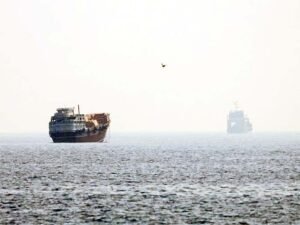 Washington : The US Central Command (CENTCOM) on Wednesday (local time) rejected Iran’s claim that the Strait of Hormuz is closed, saying commercial and energy traffic continues to move through the strategic waterway.
“CLAIM: Earlier today, a general from Iran’s Islamic Revolutionary Guard Corps claimed in media reports that ‘the Strait of Hormuz is closed’ and his country has ‘full control over it.’ This is FALSE,” CENTCOM said in a post on X.
“FACT: Traffic is flowing through the Strait of Hormuz right now carrying commercial goods and energy supplies, including 20 million barrels of crude oil. The United States and regional partners clearly control the strait,” it added.
The rebuke came in response to comments by Mohammadreza Naqdi, an adviser to the commander of Iran’s Islamic Revolutionary Guard Corps (IRGC), who reiterated Tehran’s position on the strategic waterway in comments to semi-official Fars news agency on Wednesday, Al Jazeera reported.
Naqdi also said that transit routes deemed illegal by Iran would soon be closed.
Meanwhile, Iranian Foreign Ministry spokesperson Esmaeil Baghaei said Tehran has “clearly and firmly” set out its conditions for ending the war on all fronts and restoring security to the Gulf and the Strait of Hormuz.
According to Iranian state broadcaster IRIB, Baghaei said Iran would also deliver its response to proposals from the US side through mediators, Al Jazeera reported.
Baghaei also said that Iran and Oman had reached an understanding on safe passage of vessels through the Strait of Hormuz and would soon present the agreement to the relevant international body.
“The consultation process between Iran and Oman has been carried out well, and the two sides, in addition to agreeing on the geographical coordinates of safe routes to and from the Strait of Hormuz, have also reached an understanding on how to reflect the issue at the relevant international authority level, which, God willing, will be done soon,” Baghaei was quoted by the official IRNA news agency as saying, as reported by Al Jazeera.
The development comes amid heightened tensions over the Strait of Hormuz during the ongoing conflict between the US and Iran.
Earlier, US President Donald Trump on Wednesday said the war with Iran will end “very quickly” and claimed that oil prices will “come tumbling down”, while asserting that the US had taken away Iran’s nuclear power.
“It is a war from the standpoint of what we have to do. We have to get rid of the nuclear weapons for Iran. We have taken away their nuclear power. If they had nuclear power, you would have had problems like you have never had before,” Trump told reporters while departing Washington for a San Antonio Republican campaign rally.
“Their whole country right now is wiped out. It will be over very quickly, and when it does, oil prices will come tumbling down,” he added.
Meanwhile, Iranian government spokesperson Fatemeh Mohajerani rejected Trump’s claims that Iran’s oil minister resigned due to pressure from the US war, describing the claim as “a futile effort to hide his own failures”, Al Jazeera reported.
Mohajerani said the oil minister’s resignation was “not a sign of weakness”, but an example of flexibility within a stable political system.
Iranian Foreign Minister Abbas Araghchi has meanwhile said that while Iran remains determined to defend itself, officials are serious about using diplomacy to secure the country’s interests and national security.
Araghchi said Iran’s delegation to the United Nations General Assembly in New York used the visit to present a seven-day proposed peace plan to the US to reopen the Strait of Hormuz, Al Jazeera reported, citing his Telegram channel.
Trump rejected the Iranian proposal a day after it was presented late last month, while US officials issued a counterproposal seeking to revive negotiations to end the war.
Trump on Tuesday also reiterated his claims about US control over maritime traffic through the Strait of Hormuz, saying the waterway “belongs to the United States Navy and the United States”, while describing the US naval presence there as an effective blockade against Iran.

